

Best Family Apparel Stores 2026: Top Picks for Every Age
Table of Contents
- What Makes a Family Apparel Store Worth Your Time in 2026
- Quick Comparison: Family Apparel Options at a Glance
- Best Online Shopping Sites for Families: What to Look For
- Best Kids Clothing Stores: Sizing, Durability, and Everyday Wear
- Family Matching Outfits: Coordinating Looks Without the Cheesy Factor
- Affordable Family Clothing: Where Budget Meets Quality
- How to Build a Whole-Family Wardrobe That Lasts
- Conclusion: Choosing the Right Family Apparel Store for 2026
- Frequently Asked Questions
Last Updated: October 6, 2026
What Makes a Family Apparel Store Worth Your Time in 2026
Shopping for a family of four used to mean four separate stores, four separate trips, and four separate returns. That math no longer works.
The stakes are higher than they look. A store that carries adult clothing but not baby clothing, or shoes but not accessories, forces you back into the same fragmented routine you were trying to escape. Selection is only half the equation. Sizing consistency, return policies, and shipping speed decide whether a store earns a permanent spot in your rotation.

Below, we cover what actually matters when you're comparing family clothing stores, plus the trade-offs that separate a good experience from a frustrating one.
Selection, Sizing, and the Whole-Family Test
A store passes the whole-family test when one order covers adult clothing, children's clothing, and the accessories that tie an outfit together. That means men's and women's apparel, boys' clothing, girls' clothing, and footwear under one roof.
The harder test is sizing. A retailer that runs small in kids' clothing but true-to-size in adult clothing creates guesswork on every order. Before you commit, check whether the store publishes detailed size charts for each category, not one generic chart applied across the board.
Gender-neutral clothing has also moved from niche to standard in family apparel. Many families now shop across departments instead of defaulting to boys' or girls' sections, which makes a store's filtering tools more important than its marketing.
Pricing, Shipping, and Return Policies That Actually Matter
The sticker price is rarely the real price. Shipping thresholds, restocking fees, and return windows change what you actually pay, especially on multi-item family orders where one or two pieces inevitably need to go back.
Three policy details deserve a hard look before you buy:
- Return window length. A 14-day window is tight for a family ordering multiple sizes. Thirty days gives you room to try things on across a busy week.
- Who pays return shipping. Free returns sound generous until you read the fine print on oversized or clearance items.
- Shipping consistency across categories. If apparel ships in three days but accessories take two weeks, your outfit coordination plan falls apart.
A store that's transparent about all three is worth more than one with a lower listed price and murky terms.
Quick Comparison: Family Apparel Options at a Glance
| What to Compare | Why It Matters | What to Look For |
|---|---|---|
| Category breadth | One-stop shopping saves trips | Adult, kids, baby, shoes, accessories |
| Sizing accuracy | Fewer returns, less guesswork | Per-category size charts |
| Return window | Time to try multiple sizes | 30 days or longer |
| Shipping speed | Outfit coordination timing | Consistent across categories |
| Price transparency | True cost after shipping | Clear thresholds, no hidden fees |
Best Online Shopping Sites for Families: What to Look For
Most pages ranking for this query are product listings or social posts, not buyer's guides. So instead of another set of generic criteria, here is a transparent shortlist built on four things you can actually verify before you buy: whether one order covers the whole family, whether per-category size charts are published, whether the return window is 30 days or longer, and whether shipping speed is consistent across apparel, shoes, and accessories.
How this shortlist was built. Each retailer below was checked against the same four criteria.
Mass-market one-stop retailers. Large general-merchandise chains remain the default for families who want adult, kids, baby, and footwear in a single order.
Department stores. The best fit for families who need formalwear, family-gathering outfits, and shoes alongside everyday wear.
Membership warehouse clubs. Strong on bulk basics like socks, underwear, and everyday tees, and their return policies are among the most forgiving in retail.
Direct-to-consumer brands. Best for a specific category, kids' basics, activewear, or denim, rather than whole-family shopping.
Resale and secondhand platforms. The strongest value play for kids' clothing, since children outgrow items long before they wear them out.
What to verify before your first order:
- Does the store publish a separate size chart for kids, baby, men's, and women's, or one generic chart?
- Is the return window 30 days or longer, and who pays return shipping on clearance items?
- Does apparel ship on the same timeline as shoes and accessories?
- Can you filter by size and department at the same time, or only one at a time?
Federal Trade Commission guidance on online shopping and returns
Best Kids Clothing Stores: Sizing, Durability, and Everyday Wear
Durability separates a kids' clothing store worth revisiting from one you abandon after a season. Children's clothing takes abuse: playgrounds, spills, growth spurts. Fabric weight and stitching quality matter more than the label.
Look for reinforced seams at stress points and fabrics that hold shape after repeated washing. Cotton blends generally outlast thin synthetics for everyday wear, while knitwear and denim tend to survive rougher play than lightweight materials.
Sizing runs are the other variable. Some brands cut generously for growth room; others run true to age. Read reviews specifically mentioning fit before ordering multiple sizes of the same item.
For school essentials and everyday wear, buying slightly larger in staple pieces often beats buying exact-fit items that get outgrown in weeks.
Roper 2224 Photo Collage (Multi) - Women's Western Blouse →
Family Matching Outfits: Coordinating Looks Without the Cheesy Factor
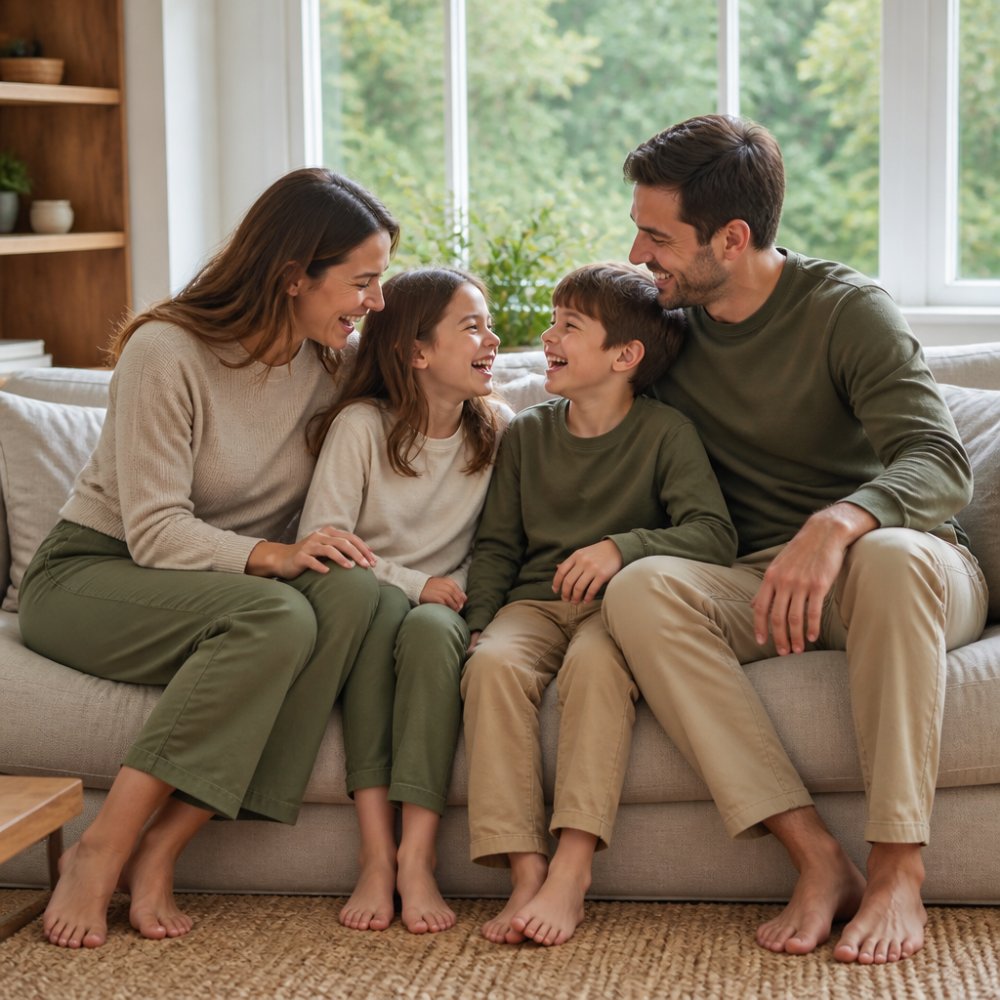
Matching family outfits work best when they coordinate rather than duplicate. Identical plaid shirts on every family member reads as a costume; a shared color palette or print family reads as intentional style.
The practical approach is to pick one anchor element, a color, a print, or a fabric, and let each person wear it differently.
This is where a single store with broad selection earns its keep. Coordinating a look across adult clothing, kids' clothing, and accessories is far easier when everything is available in one catalog with consistent color options.
Family photos and family gatherings are the two occasions where this pays off most. Plan the palette first, then shop each person's pieces against it.
Affordable Family Clothing: Where Budget Meets Quality
Affordable family clothing is a balance, not a price point. The cheapest item that falls apart in two washes costs more per wear than a slightly pricier piece that lasts a year.
Cost per wear, in practice. Divide the price by the number of times the item gets worn before it is outgrown or worn out.
Where budgets stretch furthest:
- Off-season buying. Buying next year's sizes at the end of a season is the single largest saving available to families, because children's sizing is predictable enough to plan a year ahead.
- Classic over trend. Solid colors and standard cuts stay wearable across siblings and seasons; trend-driven prints rarely survive to a second child.
- Multipacks for basics. Socks, underwear, and everyday tees are consistently cheaper per unit in multipacks than bought singly.
- Secondhand for kids. Children outgrow clothing long before it wears out, which makes resale and hand-me-downs the highest-value category in family apparel. Check measurements rather than labeled sizes, since kids' sizing varies widely between brands.
- Promotions on planned purchases only. A discount on something that does not fit your family's needs is not a saving.
Where not to cut. Everyday shoes, winter outerwear, and school backpacks take the most abuse and fail fastest when cheap. Spending more on these three categories usually costs less over a year than replacing them mid-season.
The sustainability overlap. The same choices that cut cost, buying durable pieces, passing clothing between siblings, and buying secondhand, also reduce waste.
A simple seasonal budget rule. Set a per-person figure at the start of each season, buy the foundation pieces first, and hold the remainder for mid-season markdowns.
How to Build a Whole-Family Wardrobe That Lasts
A durable family wardrobe starts with a core set of versatile pieces per person, then layers seasonal and occasion-specific items on top. Build the foundation first; add the rest as needs appear.
Here's a practical checklist for building that foundation:
- One pair of everyday denim or durable pants per person
- Two to three versatile tops that work for school, work, and weekends
- One layer for cooler weather (knitwear, vest, or jacket)
- One pair of comfortable, well-fitting shoes for daily wear
- One outfit reserved for special occasions and family photos
- One set of accessories that ties the palette together
- Size charts saved for each family member before ordering
Review the wardrobe each season and replace only what's worn out or outgrown. This keeps spending predictable and prevents the cycle of buying too much at once.
Conclusion: Choosing the Right Family Apparel Store for 2026
The right store for your family comes down to whether one order can cover everyone, whether the sizing is predictable, and whether returns are painless. Get those three right and the rest follows.
At Accent Alliance, we built our catalog around that exact problem: apparel, accessories, and everyday essentials for men, women, kids, and pets in one place. Our comprehensive catalog, trending product selections, and convenient one-stop shopping experience are designed for families who'd rather place one order than five.
Get started with Accent Alliance and simplify how your family shops for clothing, shoes, and accessories this year.
Frequently Asked Questions
What should families look for when choosing an online clothing store?
Focus on size range, return policy, and shipping speed first. A store that carries baby through adult sizes saves you from juggling multiple carts. Check whether returns are free and how long you have to send items back. Read the fabric details too, since materials like rayon and cotton blends affect how clothing holds up after repeated washes. Finally, confirm the store stocks the brands and styles your family actually wears, not just generic basics.
Where can families shop for matching outfits?
Look for retailers that carry the same print or colorway across multiple sizes, including adult and children's cuts. Western-inspired styles, plaid shirts, and solid-color knits are common choices for family matching outfits because they come in extended size runs. If you want a coordinated look for family photos or gatherings, start with one anchor piece and build around its color palette rather than buying identical sets for everyone.
What are the best clothing stores for the whole family?
The best family apparel stores carry adult clothing and children's clothing under one virtual roof, with clear sizing charts and easy returns. Stores that offer free shipping over a threshold and carry shoes and accessories alongside apparel save you from placing separate orders. Look for a mix of everyday wear and special-occasion pieces so you can cover school essentials, casual weekends, and family gatherings without switching retailers.
How can I save money on affordable family clothing?
Buy staples like denim and solid-color tops in neutral tones that mix across seasons. Watch for promotions around back-to-school and holiday shopping periods when retailers discount seasonal clothing. Compare the total cost including shipping before checkout, since a lower sticker price with paid shipping can cost more than a slightly higher price with free delivery. Sticking to machine-washable fabrics also reduces long-term care costs.
What is the 3-3-3 rule for clothing?
The 3-3-3 rule is a packing and wardrobe guideline: three tops, three bottoms, and three pairs of shoes that can mix into nine or more outfits. For families, it simplifies shopping because you buy fewer pieces that work harder. Apply it to each family member's seasonal clothing rotation to cut down on impulse buys and keep closets manageable. It works especially well for travel and for building a capsule wardrobe for kids who outgrow clothes quickly.